Free printable · PreK to Grade 2
Free minimal pairs picture cards: fronting and final consonant deletion
Minimal pairs are two words that differ by one sound, like key and tea. When a student says one but means the other, the picture shows that the sound changed the meaning. This free set has cards for fronting (k and g versus t and d) and final consonant deletion (words with and without an ending sound), each with a teacher page for data and home practice.
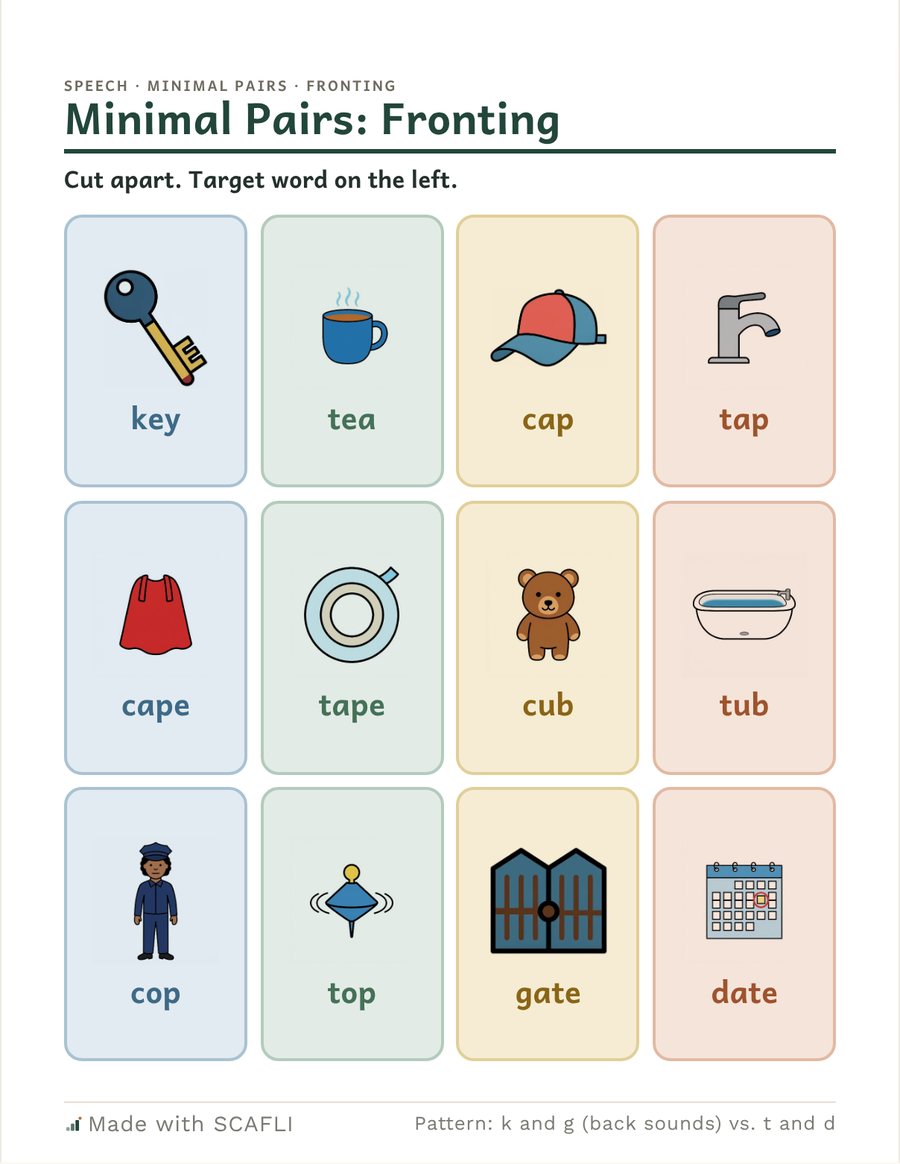
More pages in this PDF
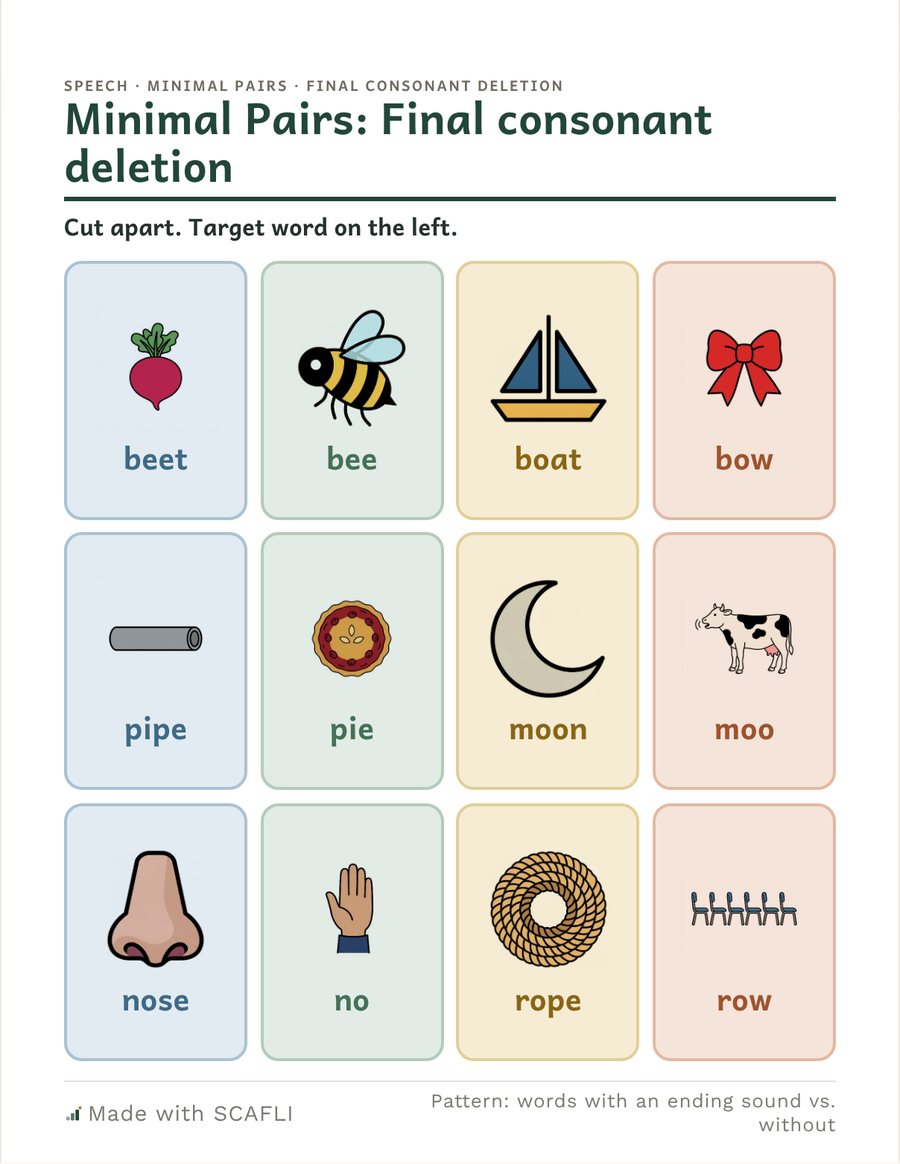 Final consonant deletion: boat and bow, pipe and pie
Make your own in seconds
Ask for minimal pairs for another pattern (stopping, gliding, cluster reduction) or a sound you choose, and SCAFLI makes the cards with pictures.
Try asking for:
- “minimal pairs final consonant deletion”
SCAFLI is in early access. The free PDF above needs no sign-up.
What it is
Picture cards for phonological patterns, target word on the left, with a teacher page that explains a listen task and a say task and has a place for data.
How to use it
- Start with listening: say one word and the student points to its picture.
- Then switch: the student says a word and you point to what you heard.
- When the wrong picture comes up, talk about how the sound changed the word.
Three quick tips
- Pick pairs whose pictures the student already knows.
- Mix the cards so the target word isn't always first.
- Send one set home for a few minutes of practice.
Questions
- Which patterns are included?
- Fronting and final consonant deletion. SCAFLI can make other patterns too.
- Is there a data page?
- Yes. Each set has a teacher page for listen and say practice and data.
- Can families use them?
- Yes. The teacher page explains a quick home practice.
A starting point for your own professional judgment. Use initials only on any page about a student.